
Industrial HMI & Control Solutions
Precision-engineered cover glass and optical panels built for the demands of industrial HMI, machine control, and harsh-environment displays. From IK10 impact resistance to wide-temperature stability across −40 °C to +85 °C -- every spec is a mass-production commitment, not a lab figure.
Precision Manufacturing · Shenzhen, China
Custom Industrial HMI Cover Glass:
Where Optical Clarity Meets Rugged Reliability
Industrial Human-Machine Interfaces operate in environments that standard consumer glass cannot survive. Oil mist, vibration, metal shavings, chemical splashes, and extreme temperature cycling all accelerate surface degradation -- causing costly unplanned downtime and safety risks on the production floor.
Winson Optics designs and manufactures custom HMI cover glass and optical panels specifically for these conditions. Our materials portfolio spans thermally tempered float glass, high-alumina chemically strengthened glass, borosilicate glass, and hard-coated optical PC -- each selected and processed to meet the exact mechanical, optical, and sealing requirements of your application.
With ISO 9001 certification, in-house CNC precision to ±0.05 mm, and a Class 1000 cleanroom assembly environment, we provide the manufacturing certainty that procurement engineers and R&D teams demand for high-volume industrial programs.
Engineering Solutions
5 Critical HMI Cover Glass Challenges --
And How Winson Solves Each One
Every specification below is derived from real failure modes reported by industrial procurement and engineering teams. We engineered our manufacturing process around these pain points -- not the other way around.
IK10 Impact Resistance
Pain Point: Unplanned line shutdowns caused by screen breakage from dropped tools or mechanical impact.
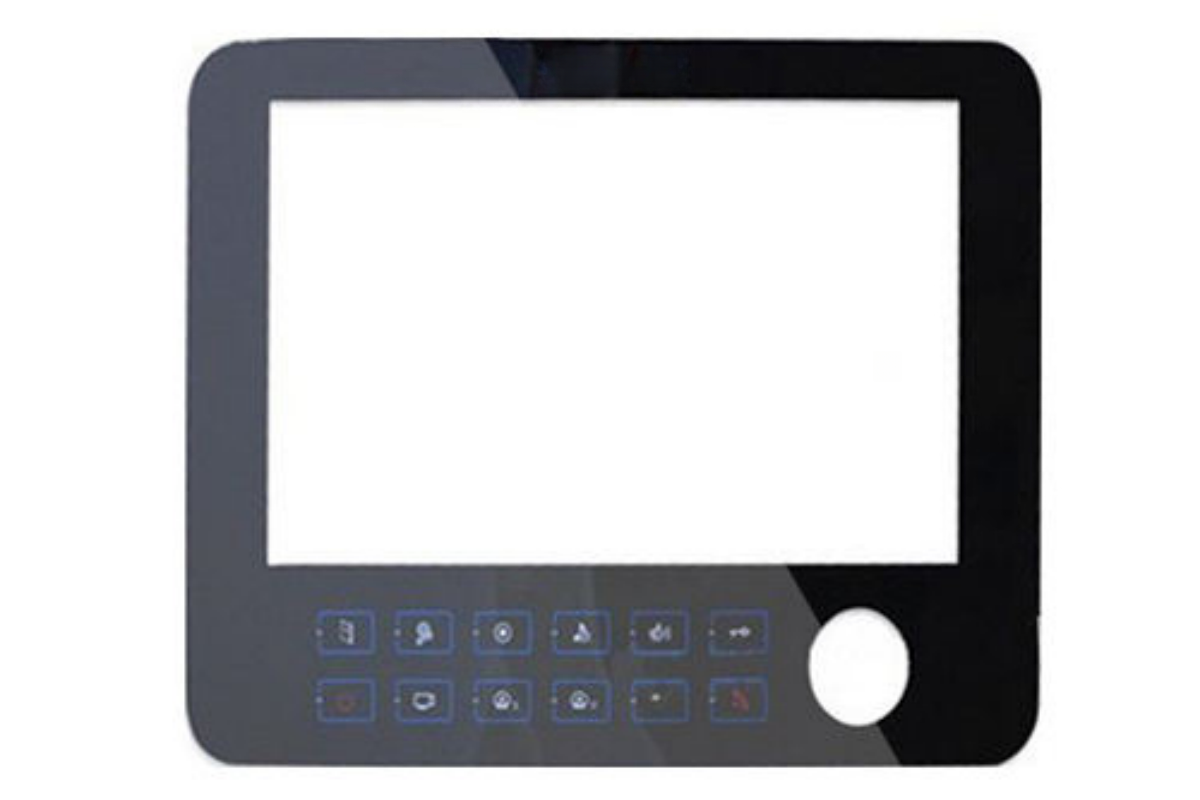
Winson Solution: We specify 6 mm+ thermally tempered or high-alumina chemically strengthened glass, validated against the IEC 62262 IK10 standard (20-joule drop-ball test). The result is a panel that absorbs severe impact without shattering -- keeping your line running and your operators safe.
- Standard
- IEC 62262 IK10
- Energy Rating
- 20 Joules
Sunlight & High-Ambient-Light Readability
Pain Point: Ceiling light reflections and direct sunlight masking critical process data on factory HMI screens.
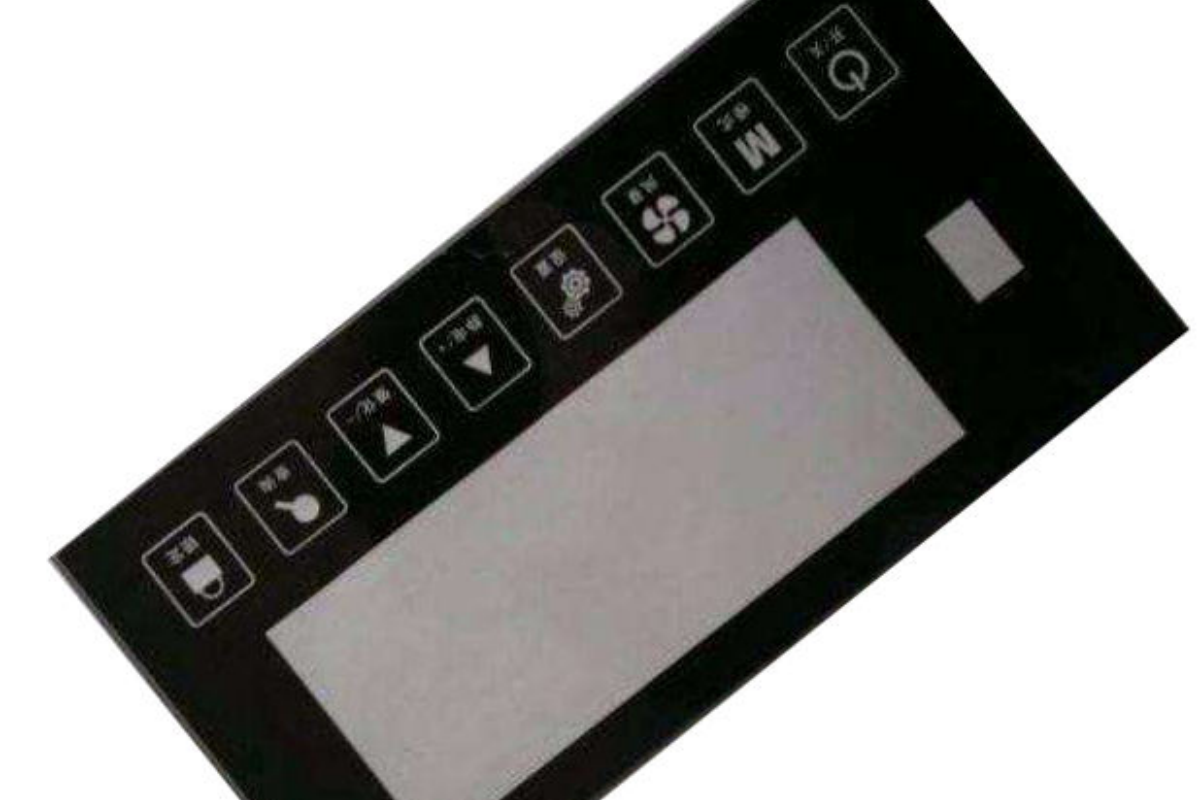
Winson Solution: We use wet-chemical AG (Anti-Glare) etching -- not spray-on coating. The process creates a permanent, sub-micron textured surface that diffuses specular reflections while preserving full image resolution and contrast. Surface gloss is tunable from 30 to 95 GU to match your display's luminance output.
- Gloss Range
- 30 - 95 GU (custom)
- Process
- Chemical Etch (permanent)
Chemical & Fluid Resistance
Pain Point: Progressive surface hazing and structural micro-cracking from daily exposure to cutting oils, hydraulic fluids, and cleaning agents.
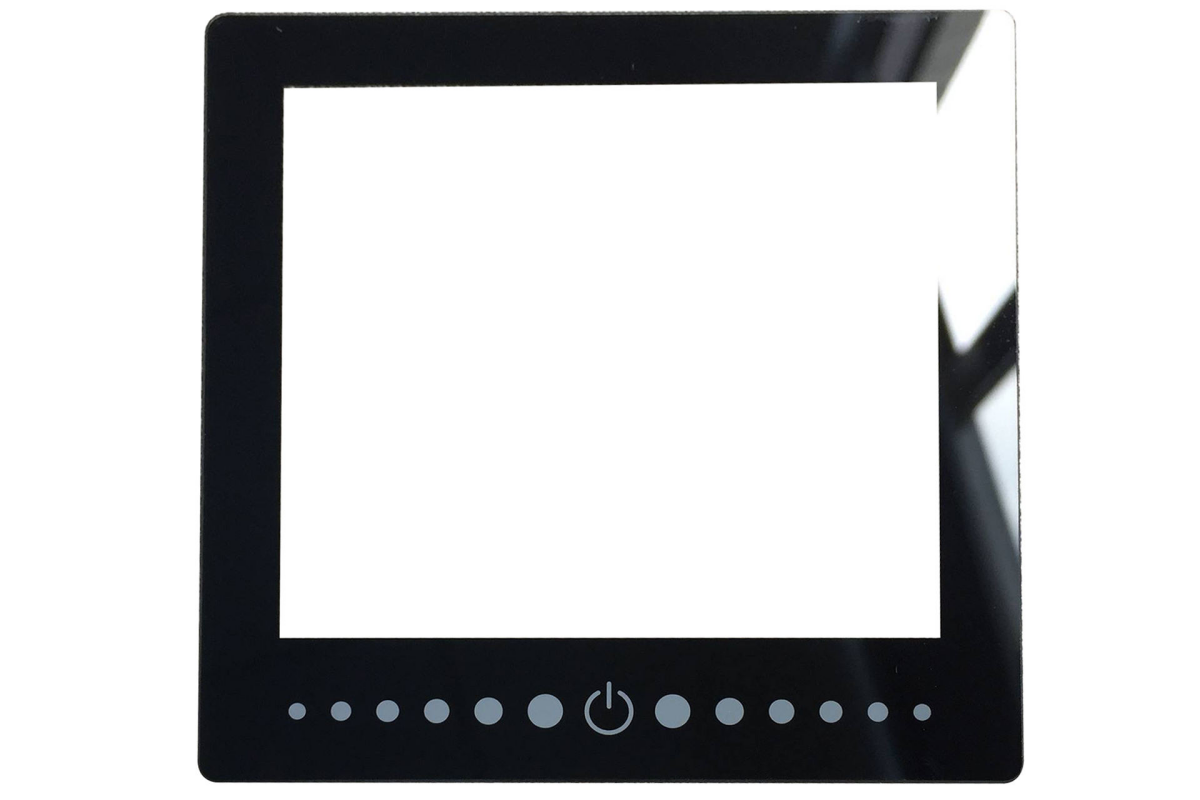
Winson Solution: Material selection is the first line of defense. We specify chemically inert glass compositions or apply AF (Anti-Fingerprint) and chemical-barrier coatings validated against ASTM D1308 immersion testing. Optical clarity and surface integrity are maintained across years of continuous chemical contact.
- Test Standard
- ASTM D1308
- Resistance
- Oils · Acids · Fuels
Wide-Temperature Dimensional Stability
Pain Point: Stress fractures, delamination, and optical yellowing in outdoor or foundry environments with rapid thermal cycling.
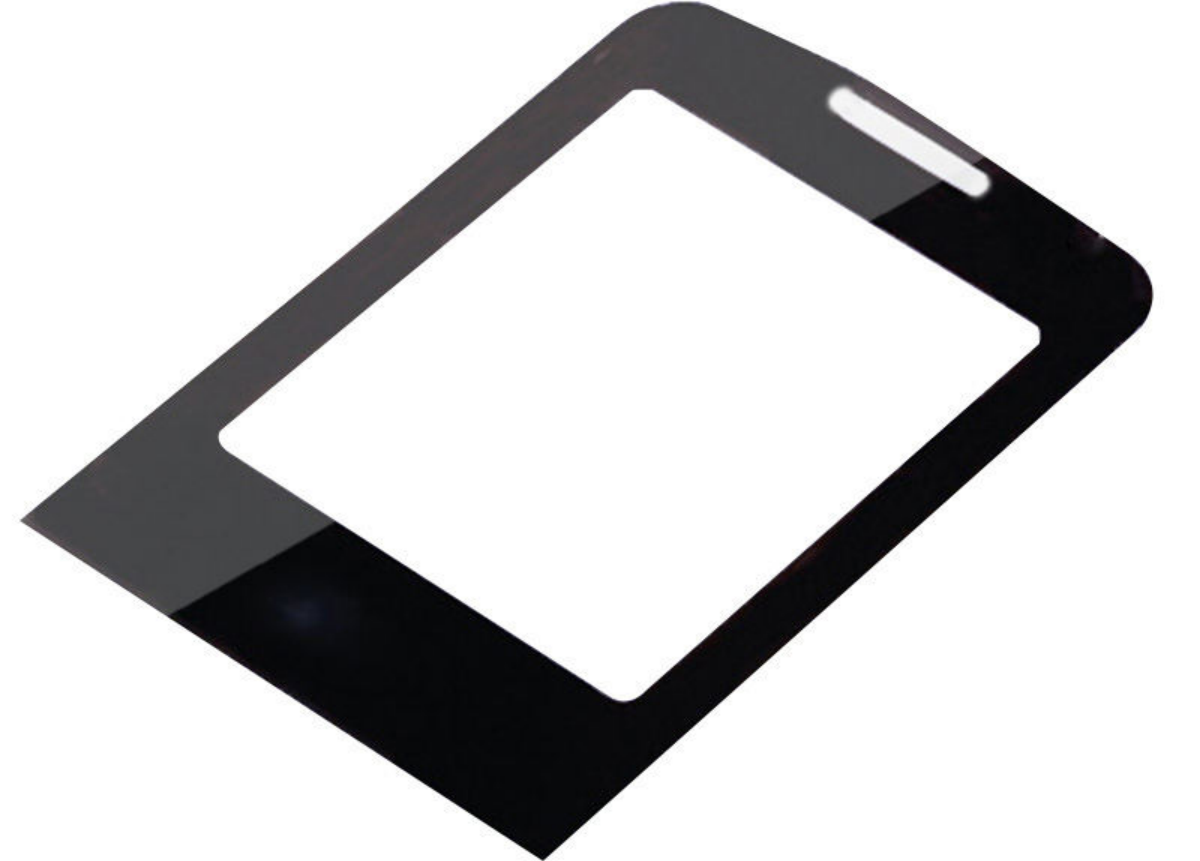
Winson Solution: We select low-CTE borosilicate glass for extreme thermal environments, or UV-stabilized optical-grade PC for applications requiring both impact tolerance and temperature resilience. Both materials are validated through MIL-STD-810 thermal shock cycling before production approval.
- Operating Range
- −40 °C to +85 °C
- Validation
- MIL-STD-810G
Glove-Friendly Capacitive Touch Surface
Pain Point: PPE gloves blocking capacitive touch response, forcing operators to remove safety equipment to interact with HMI panels.
Winson Solution: Surface roughness (Ra value) is precisely controlled during AG etching to maintain optimal dielectric properties for capacitive pass-through. We work directly with your touch sensor supplier's specifications to ensure that 3 mm nitrile or leather gloves register accurate, lag-free input.
- Ra Control
- Precision-tuned per spec
- Glove Type
- Nitrile / Leather / PVC

Technical Reference
Industrial HMI Cover Glass -- Performance Matrix
Every parameter is independently verified through in-house testing and third-party laboratory certification. This table is designed to support your engineering evaluation and sourcing decision.
| Performance Dimension | Winson Technical Standard | Industrial Application Value | Certification |
|---|---|---|---|
| Impact Resistance | Up to IK10 · 20 J Drop-Ball | Eliminates catastrophic screen failure from tool drops and mechanical shock on the production floor. | IEC 62262 |
| Surface Hardness | 6H - 9H (tempered / hard-coated) | Resists micro-scratching from metal swarf, grit, and abrasive cleaning in machining environments. | ASTM D3363 |
| Anti-Glare (AG) Gloss | 30 - 95 GU · Chemical Etch | Permanent diffusion layer reduces operator eye fatigue and maintains data legibility under high-lux factory lighting. | ASTM D523 |
| Chemical Resistance | Oils · Acids · Hydraulic Fluids | Prevents progressive hazing and structural degradation in wet machining, food processing, and chemical plant environments. | ASTM D1308 |
| Temperature Range | −40 °C to +85 °C operational | Maintains dimensional stability and optical clarity across outdoor, cold-chain, and high-temperature foundry deployments. | MIL-STD-810G |
| CNC Edge Tolerance | ±0.05 mm flatness / step | Ensures consistent gasket compression geometry for reliable IP65 / IP67 ingress protection seal integrity. | ISO 2768 |
| Optical Transmission | > 85% (uncoated) · > 99% (AR) | Maximizes display luminance efficiency, reducing backlight power demand and extending display module lifespan. | ISO 9050 |
All specifications are subject to material selection and confirmed during engineering review. Contact us for application-specific data sheets.
Sealing System Engineering
IP65 / IP67 Compliance Starts at the Glass Edge
Most enclosure failures are not caused by gasket material -- they are caused by inconsistent cover glass edge geometry. A ±0.2 mm variation in step depth creates uneven gasket compression, leaving micro-channels for water and dust ingress that bypass even the highest-grade seals.
"Having spent 12 years on the procurement side, I know that glass isn't just a window -- it's a load-bearing component of your sealing system. Our CNC edge flatness and step consistency ensure that your panels achieve a perfect IP seal every single time, regardless of batch size."
Reliability Validation -- Beyond Datasheet Claims
Our in-house reliability laboratory subjects every production batch to a full qualification protocol before shipment. These are not sample tests -- they apply to every order, from 100-unit prototypes to 50,000-unit mass production runs.
Material Engineering
Choosing the Right Cover Glass Material for Your HMI Application
Material selection is the single most consequential decision in HMI cover glass design. The following guide reflects 10 years of application engineering experience across industrial, medical, and automation sectors.
Thermally Tempered Glass
4× stronger than annealed glass. Industry-standard for general industrial HMI panels where cost-efficiency and IK08-IK10 impact resistance are the primary requirements.
- High impact resistance
- Cost-effective at volume
- Cannot be cut post-tempering
High-Alumina Chemically Strengthened
Ion-exchange process creates deep compressive stress layers. Thinner profiles with superior scratch resistance and precision post-process machining capability.
- Machinable after strengthening
- Superior surface hardness (8H+)
- Thinner, lighter designs possible
Borosilicate Glass
Ultra-low coefficient of thermal expansion (3.3 × 10⁻⁶/K). The engineering choice for extreme thermal environments including foundries, kilns, and outdoor all-weather enclosures.
- Extreme thermal stability
- High chemical inertness
- Higher material cost
Hard-Coated Optical PC
Polycarbonate with 7H+ hard coating. Combines bulletproof-grade impact resistance (250× glass) with CNC machinability. Requires UV stabilization for outdoor deployment.
- Highest impact tolerance
- Lightweight (1.2 g/cm³)
- Requires UV-stabilizer additive
Laminated Safety Glass
PVB/EVA interlayer bonding prevents shard scatter on fracture. Mandatory for operator-facing panels in food processing and pharmaceutical environments per EN 12600.
- Shard-free failure mode
- EN 12600 compliant
- Increased thickness / weight
Not Sure Which Material Fits Your Application?
Our engineering team provides free material selection consultation within 24 hours. Send us your environment specs, dimensions, and compliance requirements.
Manufacturing Process
From Drawing to Delivery:
Our HMI Cover Glass Production Workflow
Transparency in manufacturing is a core principle at Winson Optics. Here is exactly how your HMI cover glass moves from engineering approval to your dock -- with no surprises.
Glass HMI Panels
Proto: 10-15 days · MP: 15+ days-
1
Drawing Review & DFM Analysis
CAD / PDF structural drawings reviewed for CNC feasibility, tolerance verification, and material compatibility. CDR artwork confirmed for screen-print registration.
-
2
Raw Glass Cutting & CNC Shaping
Glass is cut first, then CNC-profiled to ±0.05 mm tolerance. Holes, notches, and step features machined. Edge polishing to Ra < 0.5 nm for sealing surfaces.
-
3
Tempering / Chemical Strengthening
Thermal tempering (650 °C furnace cycle) or ion-exchange chemical strengthening applied. Strength validation via 4-point bend test per ASTM C1048.
-
4
Surface Treatment (AG / AR / AF)
Chemical AG etching, AR multi-layer PVD coating, or AF nano-coating applied in cleanroom environment. Each color of screen print cured at 60-70 °C for ~30 min between layers.
-
5
100% AOI & Dimensional Inspection
Every panel inspected via automated optical inspection (AOI), spectral analyzer, and CMM dimensional verification. Zero-defect shipment protocol.
-
✓
Cleanroom Packaging & Export
Individual PE-film protection, anti-static foam interleaving, and export carton with shock indicators. Full CoC and test reports included.
Plastic HMI Panels (PC / PMMA)
Proto: 3-5 days · MP: 7+ days-
1
Artwork & Film Preparation
CDR vector artwork converted to film positives. Pantone ink mixing for each color layer. Screen stencil exposure and tension verification (standard 50×70 cm frame).
-
2
Screen Printing (Multi-Color)
Each ink color printed and cured at 60-70 °C for ~30 min before next layer. Max substrate temp limited to 80-90 °C (PMMA) or 120-130 °C (PC). UV-curable inks available for composite-free substrates.
-
3
Surface Treatment Application
AR, AG, or AF coating applied as specified. Hard-coating for PC substrates (7H+) to compensate for inherent surface softness. All treatments applied pre-cutting to protect edges.
-
4
CNC / Laser Cutting (Final Step)
Plastic is always cut last -- after all printing and coating -- to preserve edge quality. PMMA: laser cut for smooth polished edges. PC: CNC routed to prevent yellowing and black smoke from laser heat.
-
5
Visual & Dimensional QC
Full visual inspection under calibrated lighting, dimensional CMM check, and ink adhesion cross-cut test per ISO 2409. Color Delta-E verification against approved samples.
-
✓
Individual Film Protection & Export
Double-sided PE film protection, anti-static bags, and custom foam tray packaging. RoHS / REACH compliance documentation included with every shipment.
The Winson Difference
Managed with a
Procurement Mindset
Winson Optics was founded on a fundamental insight: the biggest risk in industrial optical sourcing is not quality -- it is uncertainty. Unclear specifications, inconsistent tolerances, and opaque supply chains create hidden costs that far exceed the unit price of the component.
When Iris joined as a founding partner in 2025, she brought 12 years of professional procurement experience from the other side of the table. That perspective is now embedded in every process at Winson -- from how we review drawings, to how we communicate deviations, to how we package and document every shipment.
Start Your Project
Reinforce Your Industrial HMI
with Certified Cover Glass
Send us your CAD drawings, environment specifications, and compliance requirements. Our engineering team responds within 24 hours with a technical review and precision quotation -- no generic pricing, no guesswork.