
Advanced Etched AG
Glass Panels
Eliminate 99% of harsh glare without sacrificing pixel sharpness. Our controlled Chemical Etching process restructures the glass surface at the molecular level -- delivering a permanent, zero-sparkle anti-glare solution engineered for 4K/8K displays, medical panels, and mission-critical industrial interfaces.
Why Etching Dominates Spray Coatings
Unlike cheap spray coatings that peel or cause "sparkle" on 4K screens, our chemical immersion process restructures the glass surface at a nano-level -- creating a uniform microstructure that is physically inseparable from the substrate itself.
-
01
Zero-Sparkle Mastery
Optimized particle distribution ensures high-resolution displays (4K/8K) remain crisp, eliminating the "oil-spot" effect common in low-end AG coatings. Verified via Surface Roughness Tester at Ra 0.1μm.
-
02
Atomic-Level Durability
The AG effect is an irreversible transformation of the glass substrate itself. It cannot be scratched off, worn away by cleaning chemicals, or degraded by UV exposure over the product's full lifecycle.
-
03
Nano-Uniformity at Scale
Controlled immersion depth at the micron level ensures zero gloss deviation from center to ultra-thin edges across large-format panels up to 1500mm × 1200mm.
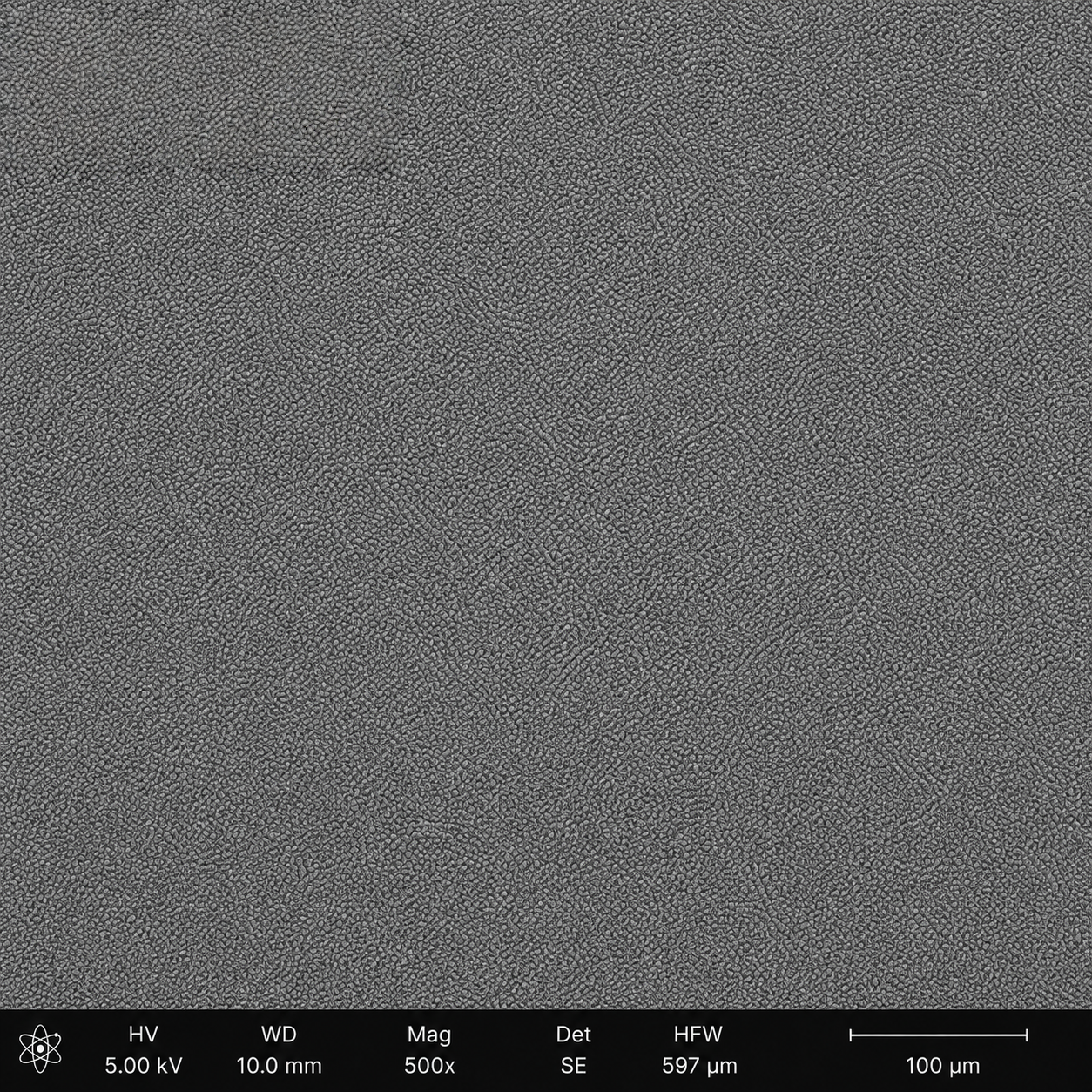
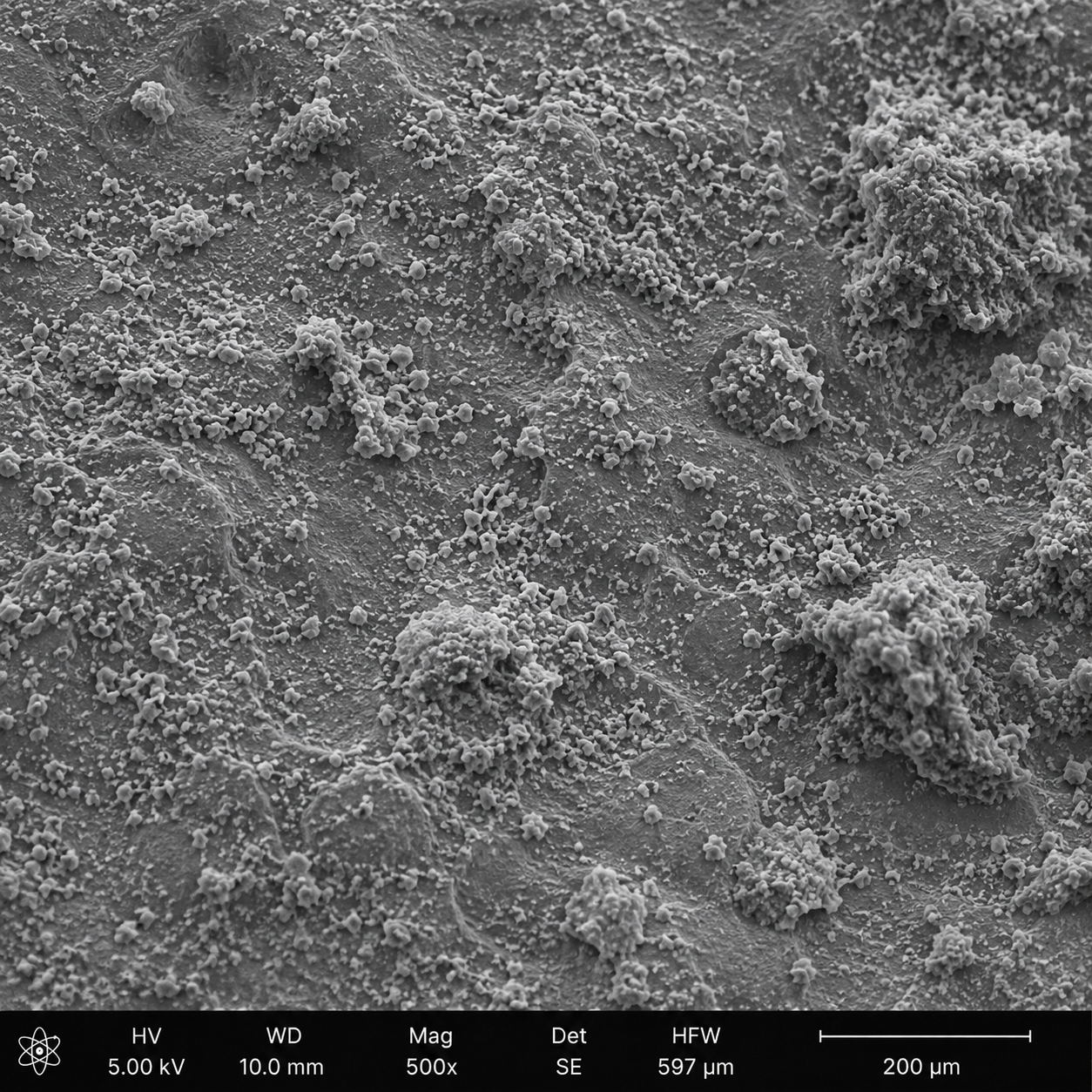
Automated Etching Line: 6-Stage Process
Every panel passes through a fully automated, cleanroom-grade production line. Each stage is monitored in real time to guarantee batch-to-batch consistency within ±5 GU tolerance.
Substrate
Inspection
AOI scan for micro-cracks, inclusions, and dimensional verification before processing begins.
Ultrasonic
Pre-Clean
Multi-stage DI water ultrasonic bath removes organic contaminants and particulates to Class 1000 cleanroom standard.
Controlled
Acid Bath
Proprietary HF-based formula. Temperature ±0.5°C, concentration ±0.2% -- the core stage that defines GU output.
Core StageNeutralization
& Rinse
Alkaline neutralization bath halts the reaction with precision timing. Cascade DI rinse removes all residual chemistry.
Spectral
Testing
In-line gloss meter (60° angle), haze meter, and spectrophotometer verify every panel against target GU spec.
100% Final
Inspection
Visual QC under standardized light booth + automated defect scanner before cleanroom packaging and shipment.
Live from Shenzhen Manufacturing Axis
Permanent Structure
vs. Temporary Coating
01. Durability Matrix
Spray coatings are prone to friction-induced peeling after 5,000-10,000 wipe cycles. Our etching is an irreversible physical transformation of the glass itself -- guaranteeing lifetime anti-glare performance with no degradation under ASTM D4060 abrasion testing.
02. Anti-Sparkle Mastery
Our proprietary chemical formula suppresses "pixel sparkle" at the microstructure level, ensuring 4K/8K displays remain razor-sharp -- a feat unreachable by generic mechanical sandblasting or spray-on coatings.
03. Nano-Uniformity
Controlled immersion depth at the micron level ensures zero gloss deviation from the center to the ultra-thin edges of large-format panels, eliminating the "halo effect" seen in dip-coated alternatives.
Precision Gloss & Haze Control
We don't provide a one-size-fits-all solution. We calibrate gloss levels based on your operating environment and display technology.
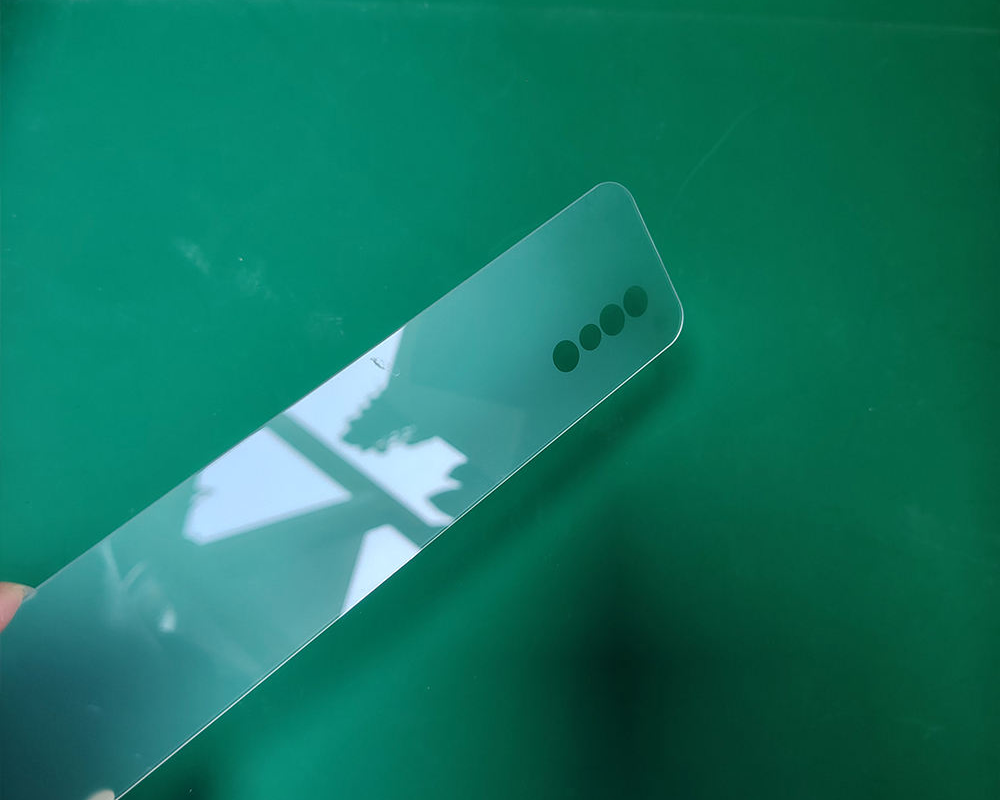
High Gloss (90-110 GU)
Engineered for smartphones, premium laptops, and consumer tablets. Maintains extreme image clarity while providing a subtle, sophisticated anti-glare effect that preserves OLED/AMOLED color fidelity.
- Haze: <3%
- Clarity: >98%
- Ra: 0.05-0.10 μm
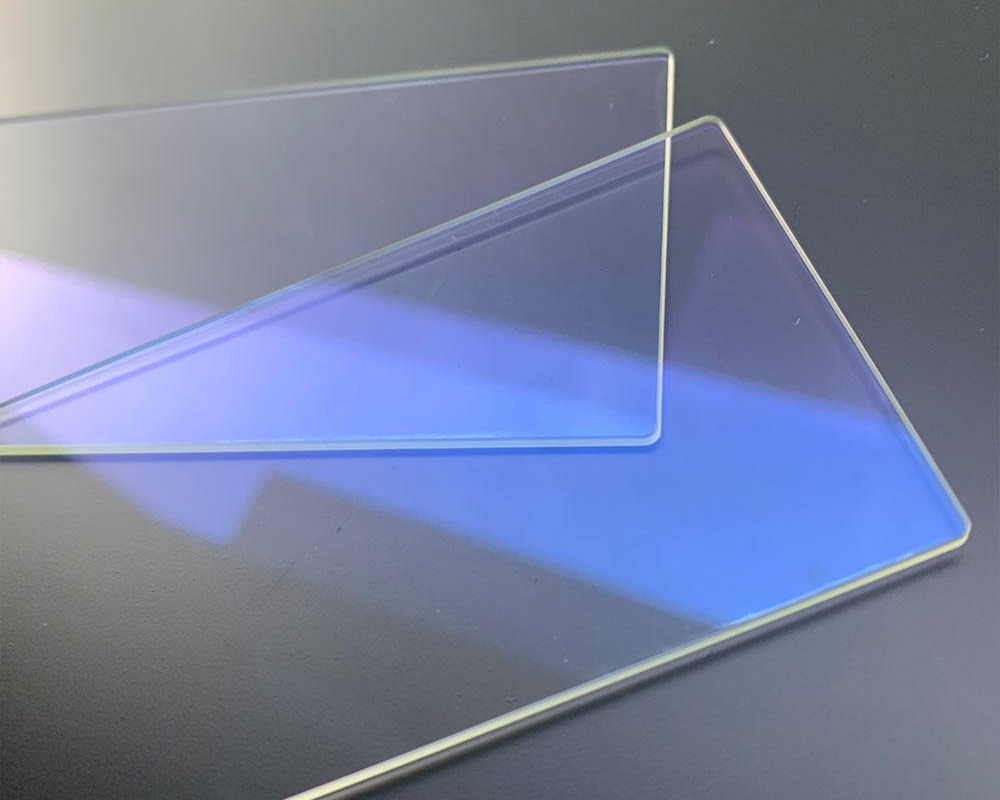
Standard (70-90 GU)
The industry standard for medical displays (ISO 13485 environments) and high-end industrial HMI panels. The perfect balance of contrast, reflection diffusion, and velvet-smooth tactile feedback.
- Haze: 5-8%
- Tactile: Velvet Smooth
- Ra: 0.10-0.18 μm
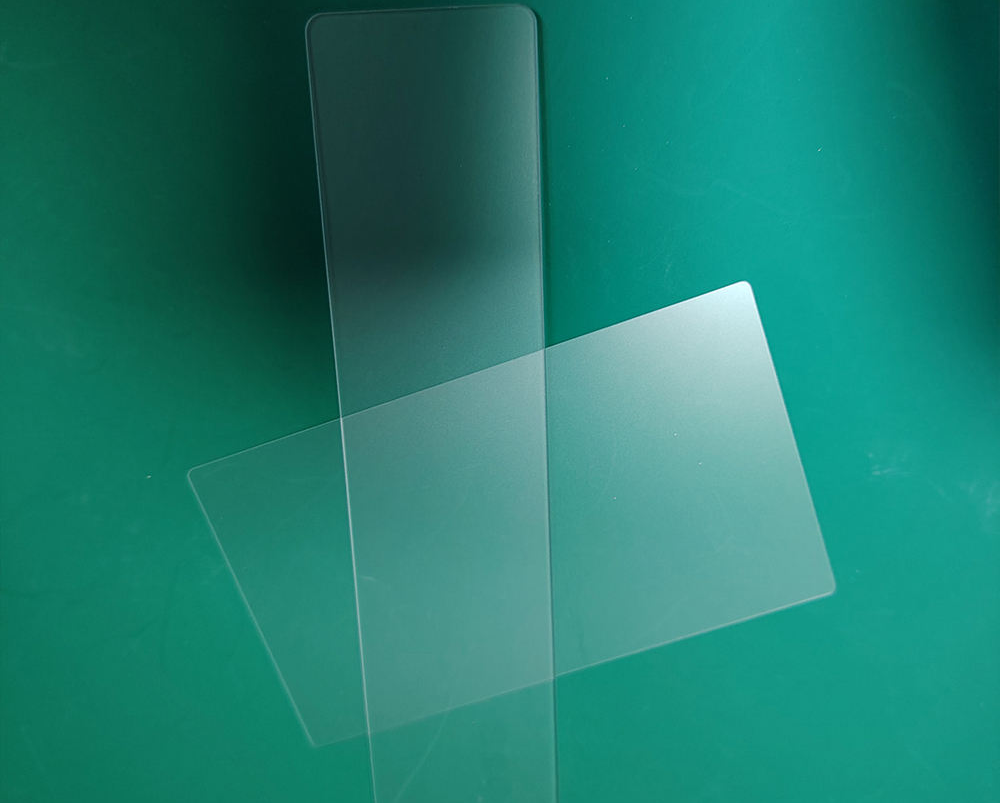
Deep Etched (30-50 GU)
Optimized for outdoor high-intensity light environments including digital signage, marine navigation consoles, and EV charging stations. Completely eliminates blinding reflections under direct sunlight.
- Haze: 10-15%
- Environment: High Ambient Light
- Ra: 0.18-0.25 μm
Not sure which gloss level fits your application? Share your display specs and environment -- Iris will respond with a calibrated recommendation within 24 hours.
Get My Gloss RecommendationAG Selection Guide: Match Your Environment
Not sure which GU level is right for your project? Use this environment-to-specification mapping table -- designed to give first-time buyers a confident starting point before consulting our engineers.
| Use Environment | Typical Application | Ambient Light | Recommended GU | Haze Range | Key Priority |
|---|---|---|---|---|---|
| Indoor -- Dim / Controlled | Home theater, studio monitors, OLED TVs | Low | 90-110 GU | <3% | Maximum image clarity & color accuracy |
| Indoor -- Office / Fluorescent | Laptops, desktop monitors, POS terminals | Medium | 80-100 GU | 3-6% | Balance of clarity and glare reduction |
| Medical / Clinical | Surgical displays, diagnostic imaging, ICU monitors | Medium-High | 70-90 GU | 5-8% | Zero distortion, ISO 13485 compliance |
| Industrial / Factory Floor | CNC HMI panels, EV charging stations, automation dashboards | High | 50-70 GU | 8-12% | Durability + readability under mixed lighting |
| Outdoor -- Partial Sun | Digital signage, ATMs, outdoor kiosks (shaded) | High | 40-60 GU | 10-13% | Strong glare suppression, weather resistance |
| Outdoor -- Direct Sunlight | Marine navigation, solar-exposed kiosks, automotive exteriors | Extreme | 30-50 GU | 12-15% | Maximum glare elimination, sunlight readability |
Note: These are starting-point recommendations. Final specification should be confirmed with our AG engineers based on your display PPI, viewing angle, and substrate material.
Get a Free Spec ConsultationOptimized for Diverse Real-World Challenges
Engineering precision where standard solutions fail.
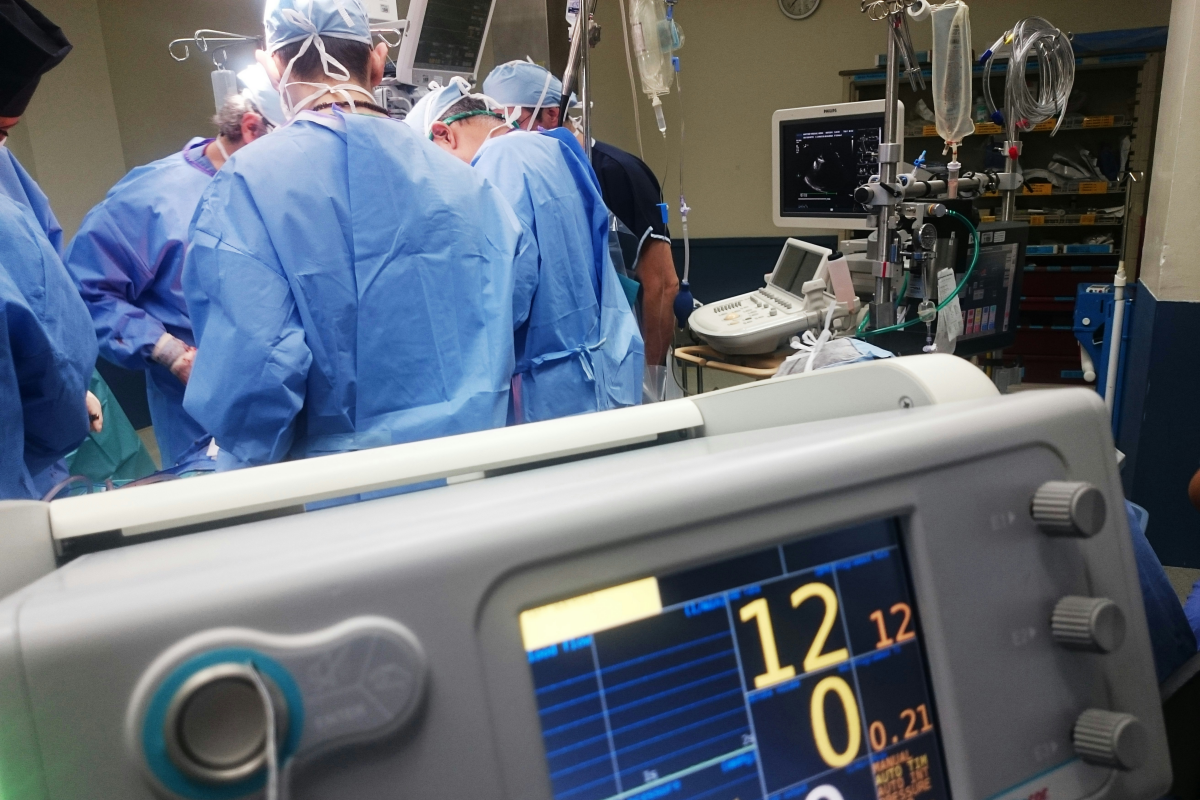
Medical Grade
Clarity
Eliminates surgical light reflections on diagnostic displays -- preventing misdiagnosis caused by glare interference. Certified for 8K imaging precision with zero optical distortion. Withstands IPA and hospital-grade disinfectant cleaning protocols.
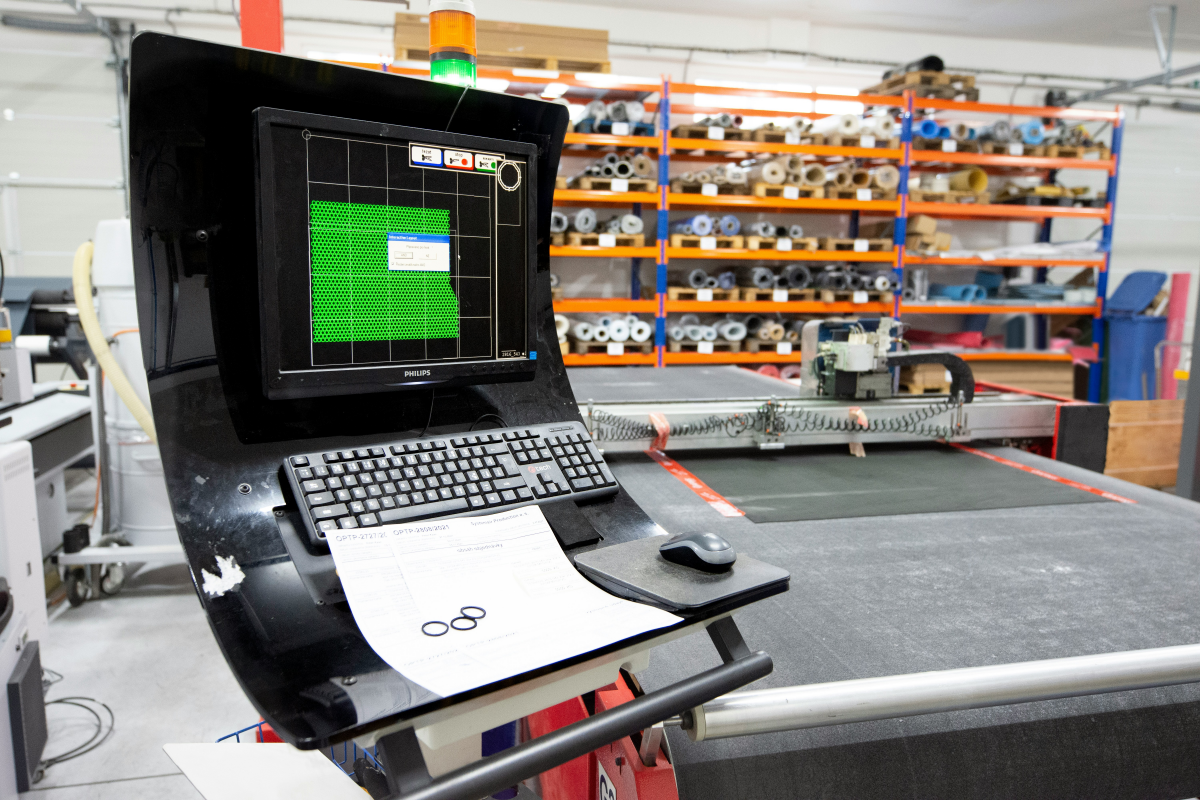
Industrial
Resilience
Ideal for CNC controllers and EV charging station interfaces -- maintaining readability under factory floor lighting conditions. Tested against grease, metallic dust, and direct UV exposure. Maintains interface readability and touch sensitivity in outdoor-rated enclosures.

Automotive
Safety
Eliminates reflections on instrument cluster glass and Center Information Display (CID) panels -- reducing driver distraction. Prevents driver disorientation while maintaining sharp HUD visibility across varying sunlight angles. IATF 16949 process compliance available.
Etched AG Glass: Expert Answers
Answers to the most technically demanding questions from engineers and procurement managers worldwide.
Does etched AG glass reduce screen brightness?
Minimal and well within acceptable limits. Our chemical etching process maintains a total transmittance of ≥91% -- compared to the 92% of unprocessed float glass. The <1% transmittance reduction is imperceptible to the human eye and well within DICOM display standards for medical imaging.
For comparison, a standard anti-reflective (AR) coating achieves ~93% transmittance, while a spray-on AG coating typically drops to 85-88%. Our etched AG is significantly superior in light throughput to coating-based alternatives.
Can etched AG be combined with AR (Anti-Reflective) coating?
Yes -- and this is one of the most powerful combinations available for premium display applications. Etched AG provides diffuse scattering (reducing specular glare), while AR coating provides destructive interference (reducing overall reflectance). Applied together, they achieve reflectance values as low as 0.3-0.5%.
This AG+AR stack is increasingly specified for high-end medical imaging panels, aerospace cockpit displays, and premium automotive HUDs. We apply the AR coating via magnetron sputtering after the etching process is complete. Contact our engineers for combined TDS documentation.
What is the difference between etched AG and sandblasted AG glass?
Sandblasting uses abrasive particles to mechanically roughen the glass surface, creating irregular, large-scale surface features (Ra typically 0.5-2.0 μm). This causes significant "pixel sparkle" on high-resolution displays and introduces micro-cracks that weaken the glass structurally.
Chemical etching uses a precisely controlled acid bath to create a uniform nano-scale microstructure (Ra 0.05-0.25 μm). The result is a dramatically smoother surface with zero sparkle, higher transmittance, superior tactile feel, and no structural degradation. For any display above 1080p, sandblasting is not a viable option -- chemical etching is the only engineering-grade solution.
Can etched AG glass be applied to curved or shaped panels?
Yes, with important process sequencing considerations. For glass substrates, etching must be performed before hot-bending or tempering, as the chemical process requires a flat, uniform immersion. Post-bend etching is possible for shallow curves (<5° radius) but requires custom jigging and is quoted case-by-case.
For flat panels with complex edge profiles (CNC-cut shapes, holes, notches), we perform the etching process after all mechanical cutting and drilling to avoid micro-crack propagation. This is a key process advantage of our factory -- our in-house CNC and etching lines share the same facility, enabling tight process integration.
What is the minimum order quantity (MOQ) and typical lead time?
Our standard MOQ for custom etched AG glass panels is 50 pieces per specification for prototyping orders. Mass production MOQ begins at 500 pieces and scales to millions per year depending on panel size.
Lead times: Prototyping (custom size + GU spec) typically requires 10-15 business days from drawing approval. Mass production runs are typically 15-25 business days depending on order volume and substrate availability. Rush prototyping (7-10 days) is available for qualified projects -- contact Iris directly at [email protected].
Is etched AG glass compatible with touchscreen (capacitive) integration?
Yes -- chemical etching is fully compatible with capacitive touch sensor bonding. The etching process is applied only to the front (display-facing) surface, while the rear surface remains optically flat for OCA (Optically Clear Adhesive) or SCA bonding to touch sensor films.
Our 70-90 GU "velvet smooth" finish (Ra 0.10-0.18 μm) is specifically optimized for finger-touch interfaces -- providing excellent glide feel while maintaining full multi-touch sensitivity. For projected capacitive (PCAP) touchscreens, we recommend a maximum haze of 8% to preserve touch signal integrity through the cover glass stack.
Start Your Custom AG Project
Our engineering team responds within 24 hours with technical consultation and precise pricing. Provide your GU target, panel dimensions, and application -- we'll handle the rest.