
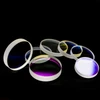
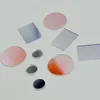

The difference between optical glass and ordinary glass
There are significant differences between optical glass and ordinary glass, mainly manifested in the following aspects:
I. Material Composition
Optical Glass: Mainly made of borosilicate glass or fused silica glass. These are specialty materials designed for optical instruments, requiring high raw material purity and strictly controlled low levels of harmful impurities.
Ordinary Glass: Produced from raw materials such as sand (mainly silicon dioxide), limestone, and soda ash. Its composition is relatively simple, and it is mainly used for wind insulation and light transmission in buildings.
II. Processing Technology
Optical Glass: Requires high precision and strict quality inspection. The manufacturing process is complex, demanding advanced techniques, sophisticated equipment, precise temperature control, and fine processing procedures.
Ordinary Glass: Relatively easy to process. It can be formed into various shapes by extrusion or molding after melting.
III. Performance
Optical Glass: Features high transparency, high hardness, stable mechanical and optical properties. It has a high refractive index, low dispersion, excellent imaging quality, and good performance in ultraviolet and infrared transmission.
Ordinary Glass: Relatively low transparency and poor uniformity. Light passing through may be distorted, leading to data deviations and errors in imaging applications.
IV. Application Fields
Optical Glass: Mainly used to manufacture lenses, prisms, mirrors, windows and other components for optical instruments or mechanical systems, especially in scenarios with strict requirements for optical performance.
Ordinary Glass: Used in buildings for wind insulation and daylighting. It can also be processed into colored glass, tempered glass, etc., for use in various industries.