The dream of lightweight, high-clarity Augmented Reality (AR) glasses hinges on a single critical component: the Optical Waveguide. According to a recent technical feature in Laser Focus World, the industry is moving toward “System Optimization”—a holistic approach where the light engine and the glass substrate must work in perfect harmony. For AR to be wearable […]

The dream of lightweight, high-clarity Augmented Reality (AR) glasses hinges on a single critical component: the Optical Waveguide.
According to a recent technical feature in Laser Focus World, the industry is moving toward “System Optimization”—a holistic approach where the light engine and the glass substrate must work in perfect harmony.
For AR to be wearable and visually immersive, the glass substrate must be incredibly thin yet possess a high refractive index to ensure a wide Field of View (FOV) and vibrant image quality.
01 / The Optical Challenge of AR Waveguides
Waveguide design relies on the principle of Total Internal Reflection (TIR).
In this high-precision environment, even a nanometer-scale deviation in surface flatness or a minor material impurity can cause:
-
Image Distortion: Ruining the immersive experience for the user.
-
Light Leakage: Drastically reducing battery life and display brightness.
-
Chromatic Aberration: Causing “rainbow” effects that lead to eye strain.
As AR technology transitions from laboratory prototypes to professional tools for surgeons and industrial engineers, the demand for sub-micron flatness and zero-defect surface quality has become a manufacturing baseline.
。
02 / How Winson Optics Supports Next-Gen Optical Systems
At Winson Optics, we stay ahead of these design trends by providing the manufacturing backbone for complex optical systems.
While optical designers focus on the “System Optimization” mentioned in the latest industry reports, our mission is the physical realization of those high-index designs:
-
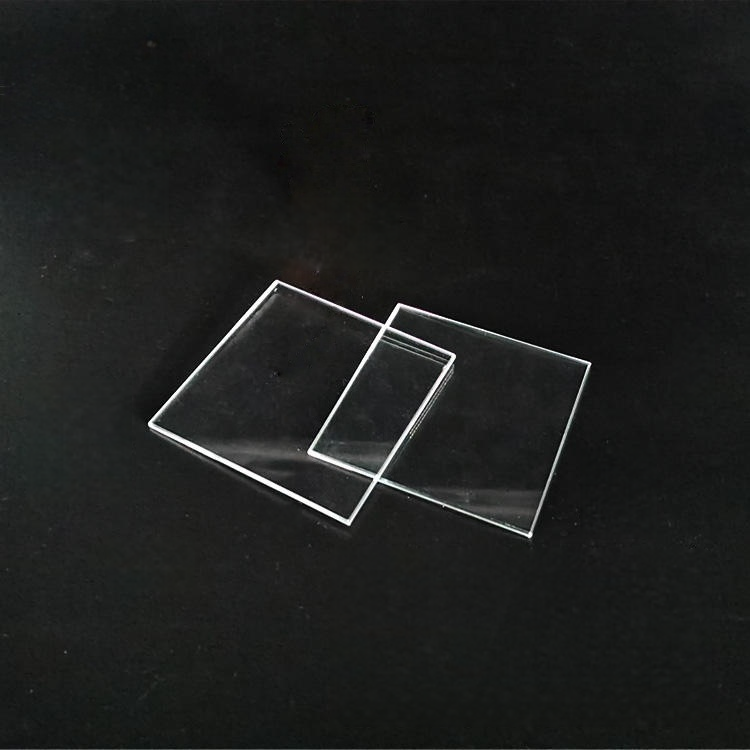
Ultra-Thin Substrate Handling: We specialize in processing specialty glass as thin as 0.1mm to 0.5mm, maintaining structural integrity through proprietary cutting and annealing protocols.
-
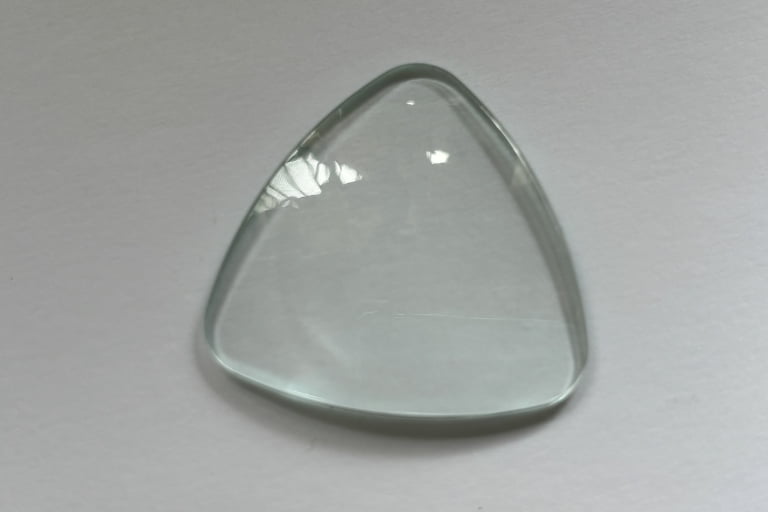
High-Precision Surface Polishing: Achieving the extreme flatness and low surface roughness (Ra < 0.5nm) required for high-index glass substrates used in advanced AR/VR/MR applications.
-
Advanced Edge Treatment: Our multi-axis CNC grinding ensures that the edges of optical windows are free from micro-cracks, preventing light scattering within the waveguide.
03 / Conclusion: Bridging the Gap Between Design and Reality
Whether you are developing next-generation AR headsets or high-precision diagnostic instruments, the quality of your optical substrate is the foundation of your system’s performance.
Winson Optics combines a decade of sourcing expertise with state-of-the-art processing to bring your most ambitious optical designs to life.
[Footer Reference ]
Source: Adapted from “Waveguide design for AR glasses system optimization,” Laser Focus World.