
01 | The Challenge: Two Sensing Routes in Wearable Market
We supported a smartwatch client developing a premium wearable line.
The team was evaluating two mainstream heart rate sensing solutions.
The low-cost solution uses flat plastic with protruding metal ECG probes.
This structure is cheap to assemble, but it has inherent physical limits.
Readings are highly sensitive to sweat, arm movement and loose band fit.
It cannot deliver consistent physiological data for high-end consumer or medical-grade wearables.
The client’s target product positioning required stable, real-time heart rate tracking during sports.
A simple probe design would fail to meet the specification, which led them to explore a custom 3D convex heart rate sensor window.
02 | Our Action: DFM Breakdown of Probe vs Convex Heart Rate Sensor Window Design
We performed a full DFM analysis to compare the two technical paths and recommended a 3D convex heart rate sensor window.
The convex dome design brings two core optical advantages:
- Consistent skin contact: The curved surface maintains close contact with the wrist even when the watch strap is slightly loose.
- Suppress ambient light interference: The domed structure helps form a stable light path for the PPG module, so reflected light from blood vessels can be captured reliably. We also clarified the manufacturing boundary: injection molding cannot guarantee the micron-level curvature and optical uniformity required for this heart rate sensor window. Precision CNC machining is mandatory.
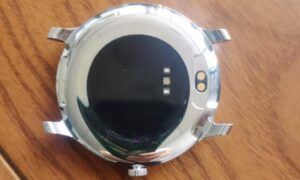

03 | Our Solution: Micron-level CNC Optical Machining for Heart Rate Sensor Window
We redesigned the heart rate sensor window with high-transmission substrate (PMMA / PC / sapphire based on client budget).
Three key controls were implemented:
Curvature Tolerance: CNC machined the convex radius and height to micron tolerance to keep the optical module in focus.
Optical Polishing: Fine optical polishing to reach ≥92% light transmittance. Micro scratches or haze will degrade PPG signal quality.
Functional Coating: Skin-safe hard coating with anti-fingerprint and abrasion resistance, resisting long-term friction and sweat corrosion.
04 | The Result & Value
The client validated the convex heart rate sensor window prototypes and moved forward to mass production.
Stable Sensing Performance: The PPG signal remains robust under motion and sweat exposure.
Premium User Experience: The seamless curved window delivers a high-end look and comfortable skin touch.
Durability Passed: No coating peeling or optical surface damage after abrasion and sweat ageing tests.
05 | Conclusion
A low-cost wearable chooses a sensing assembly.
A premium wearable chooses an engineered optical system built around a reliable heart rate sensor window.
At Winson Optics, we provide DFM evaluation and custom optical component machining for wearables.
We help your team pick the right optical solution before you lock your design.
Send your drawings for a free DFM review.